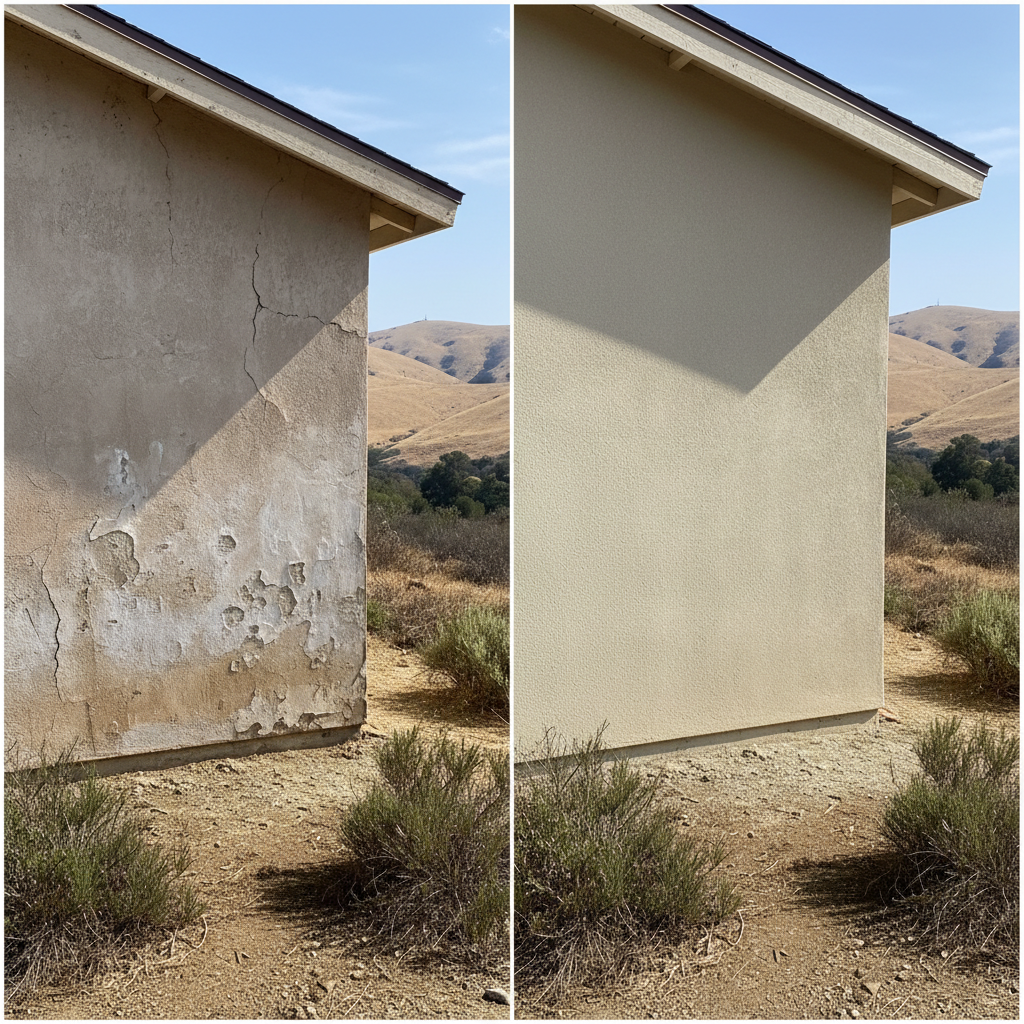
Thinking about putting commercial-grade stucco on your King City home? That's a smart move. When folks talk about commercial stucco, they're usually looking for something that's built to last, tough as nails, and looks sharp for years without a lot of fuss. But even within that, you've got choices, mainly between what we call 'hard coat' stucco and 'synthetic' (EIFS) stucco. I've worked with both for decades, and I can tell you there are real differences you need to understand before you pick one.
What's Hard Coat Stucco? The Traditional Workhorse
Hard coat stucco is the old-school stuff, the kind that's been around for centuries. It's basically a mix of cement, sand, lime, and water. We apply it in multiple layers over a lath (usually metal mesh) that's attached to your wall. Each layer cures, making it incredibly hard and durable. Think of it like a thin concrete shell over your home.
Hard Coat: The Pros
- Durability: This is where hard coat shines. It's incredibly impact-resistant. You can hit it with a baseball, and it'll probably just shrug it off. It doesn't dent or puncture easily.
- Breathability: Hard coat stucco breathes really well. That's important in a place like King City, especially when we get those hot, dry summers and then the occasional heavy winter rains. It allows moisture to escape, which helps prevent problems like mold and rot behind the walls.
- Fire Resistance: It's non-combustible, giving your home an extra layer of fire protection.
- Cost: Generally, the material cost for hard coat is a bit less than synthetic, though labor can be similar depending on the complexity of the job.
Hard Coat: The Cons
- Cracking: Because it's so rigid, hard coat can develop hairline cracks over time, especially with foundation movement or significant temperature swings. These are usually cosmetic, but they can be a pathway for water if not addressed.
- Insulation: It doesn't offer much in the way of insulation on its own. If energy efficiency is a top priority, you'll need to beef up your wall insulation underneath.
- Weight: It's heavy. Your home's structure needs to be able to support it. Most modern homes are built for this, but it's something to consider for older structures.
What's Synthetic Stucco (EIFS)? The Modern Option
Synthetic stucco, or Exterior Insulation and Finish Systems (EIFS), is a newer approach. It starts with a layer of foam insulation board that's attached to your exterior sheathing. Over that, we apply a base coat with a reinforcing mesh, and then a finish coat that gives it its color and texture. It's a completely different animal than hard coat.
Synthetic Stucco: The Pros
- Insulation: This is EIFS's biggest selling point. That foam board provides excellent insulation, which can really cut down on your heating and cooling bills. In King City, where our temperatures can swing wildly from hot days to cool nights, that's a big advantage.
- Flexibility: Because of the foam and the acrylic finish, EIFS is more flexible than hard coat. It's less prone to cracking from minor structural shifts or temperature changes.
- Lightweight: It's much lighter than traditional stucco, which can be a benefit for certain structures.
- Appearance: You can get a huge range of colors and textures, often smoother and more uniform than hard coat.
Synthetic Stucco: The Cons
- Moisture Management: This is the big one, and where EIFS gets a bad rap sometimes. If EIFS isn't installed perfectly with proper flashing and drainage, water can get trapped behind it. Since it's not breathable like hard coat, that trapped moisture can lead to serious rot and mold issues. This is why you need a contractor who really knows what they're doing, like us at Valley Stucco Co.
- Impact Resistance: It's not as hard as traditional stucco. A sharp impact can dent or puncture the foam layer underneath, which then needs repair.
- Cost: Generally, the material cost for EIFS is higher than hard coat.
Which One Should You Choose for Your King City Home?
Alright, so you've got the rundown. For a home in King City, what's my recommendation? Honestly, for most residential applications where you're looking for that commercial-grade durability, I lean towards **hard coat stucco**.
Here's why:
- Our Climate: We get a good mix of sun, heat, and sometimes heavy rain. Hard coat's breathability is a huge advantage here. It handles the moisture better if there's any penetration, reducing the risk of hidden damage.
- Durability: For a home, you want something that can take a beating from kids, pets, or just general life. Hard coat's impact resistance is tough to beat.
- Longevity: When installed right, hard coat stucco lasts for decades with minimal fuss. It's a proven system that holds up well.
Now, that's not to say EIFS is bad. If you're building a new home from the ground up and energy efficiency is your absolute top priority, and you're willing to pay for a top-tier installer who guarantees their moisture management system, EIFS can be a fantastic choice. But for most folks looking to re-stucco or build, the peace of mind and proven track record of hard coat in our specific conditions often makes it the better bet.
No matter which you choose, the most important thing is a quality installation. A bad install on either system will cause you headaches down the road. Make sure your contractor understands the specifics of our local weather patterns and soil conditions, especially how they affect foundations and moisture. We've seen homes in the older parts of town, like around Broadway, where the ground has settled over the years, and a flexible system might seem appealing, but a well-installed hard coat with proper expansion joints handles that just fine.
Got more questions? Give us a call at Valley Stucco Co. We're happy to talk through your specific project and help you figure out the best path forward for your home.