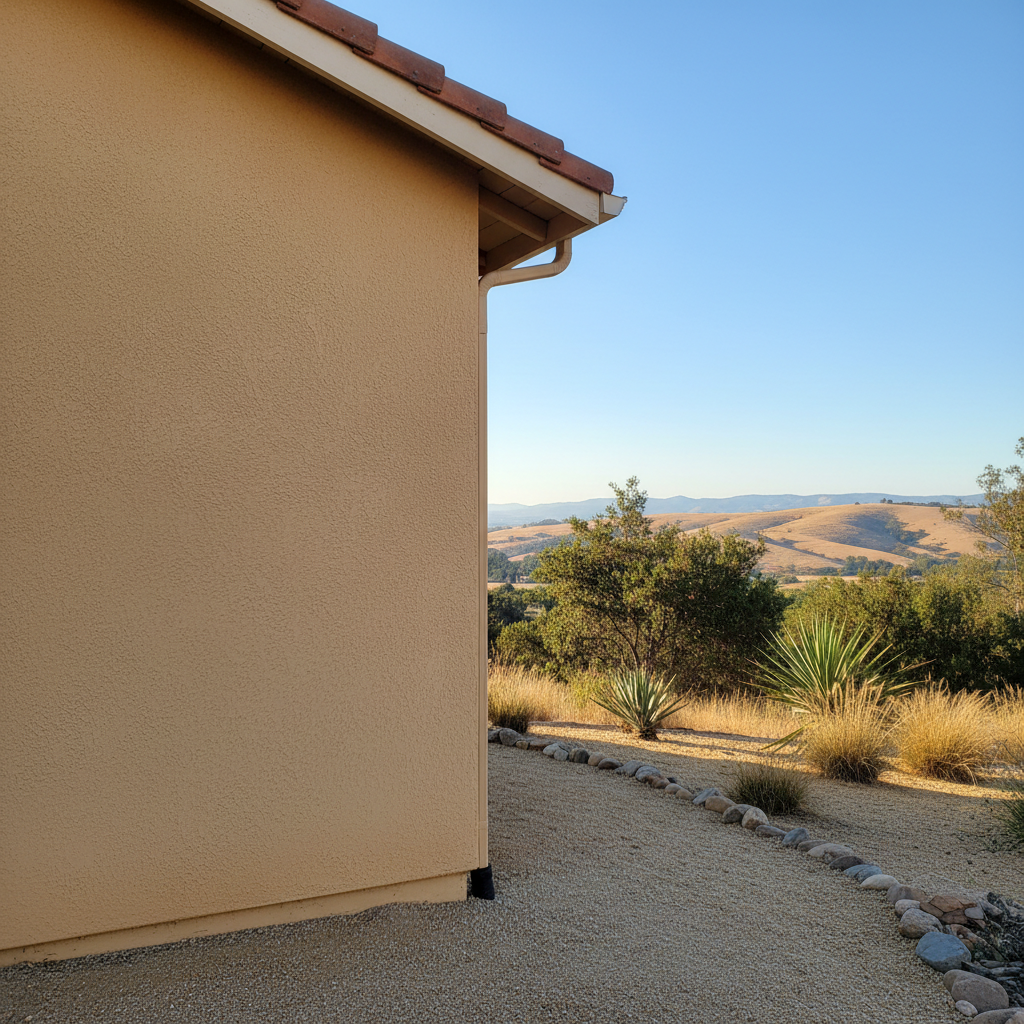
Alright, let's talk about keeping your stucco in top shape. You've invested in a durable, good-looking exterior, and with a bit of regular looking-over, that stucco can easily outlast you. I've seen stucco jobs around King City that are fifty years old and still holding strong because someone bothered to pay attention. It's not hard, but it is important.
Extending Your Stucco's Lifespan
The biggest thing you can do to make your stucco last is pretty simple: keep it clean and keep it dry. Seriously, that's like 80% of the battle. Dirt and grime can hold moisture against the surface, and moisture is stucco's number one enemy. A good rinse with a garden hose once or twice a year, especially after a dusty summer, can make a huge difference. If you've got some stubborn spots, a soft brush and a mild detergent solution (like dish soap and water) will usually do the trick. Just make sure to rinse it all off thoroughly.
Another big one is managing water around your foundation. We get some pretty heavy rains here sometimes, and if your gutters are clogged or your downspouts are dumping water right next to your house, that's a recipe for disaster. Make sure water is directed away from your foundation, at least a few feet. Check your sprinklers too – you don't want them constantly spraying the bottom of your stucco walls. That constant dampness will eventually cause issues.
Regular Maintenance Checks You Can Do
You don't need to be a stucco expert to do a quick visual check. I tell folks to walk around their house once every three to six months. Think of it like checking the oil in your car. Here's what I'd look for:
- Cracks: Not all cracks are bad. Hairline cracks, especially around windows and doors, are pretty common and usually just surface-level. But if you see cracks that are wider than a credit card, or if they're running in a spiderweb pattern, or if they're horizontal and look like they're following a seam, those need more attention.
- Discoloration or Stains: Dark streaks, especially under windows or near the roofline, often mean water is getting in somewhere. Green or black patches could be mold or mildew, which usually indicates a damp spot.
- Bulges or Soft Spots: Gently press on the stucco in a few places. Does it feel soft or spongy? Does it sound hollow when you tap it? That's a red flag.
- Missing or Damaged Sealants: Look at where your stucco meets other materials – around windows, doors, and utility penetrations. Is the caulk cracked, peeling, or missing? That's an open invitation for water.
- Efflorescence: This looks like a white, powdery residue on the surface. It's minerals left behind when water evaporates from inside the wall. It means water is getting in and trying to get out.
- Gutters and Downspouts: Are they clear? Are they directing water away from the house?
- Landscaping: Are plants and shrubs growing directly against the stucco? They can hold moisture against the wall and prevent it from drying out. Give your stucco some breathing room.
Here in King City, especially with our dry summers and then those intense winter rains, these checks are even more important. The rapid temperature changes and moisture fluctuations can really test a stucco system.
When to Call a Professional
Look, I'm not going to tell you to call Valley Stucco Co. for every little thing. Most minor issues you can handle yourself. But there are definitely times when you need a pro to take a look.
If you see any of those serious warning signs I mentioned – wide cracks, spiderweb cracking, significant bulging, or persistent dark staining that you can't clean off – don't mess around. These could indicate structural movement or, more commonly, water intrusion that's doing damage behind the stucco. The longer you wait, the more expensive the fix usually gets.
Also, if you're not comfortable getting up on a ladder to check your second story, or if you're just unsure about what you're seeing, that's a good time to call. A professional stucco contractor can do a thorough inspection, often using moisture meters to detect hidden problems. We know what to look for and where the common failure points are. Sometimes, it's a simple recaulk. Other times, it's a bigger repair, but catching it early saves you a lot of headaches and money down the road.
Think of it as preventative medicine for your house. A little attention now can save you a major operation later. Your home's exterior is its first line of defense, so keep it strong.